
 Tiếng Việt
Guide to Planning School Meal Portions by Age Group
A school meal is more than simply “eating to feel full.” A warm tray of fragrant rice, light soup, crisp vegetables, and fresh fruit directly supports children’s physical development while also supporting students’ concentration throughout the day. Each age group requires different energy levels, micronutrients, and nutritional ratios, so a single formula cannot be applied to school meal portions for every age group. Therefore, age-appropriate meal planning is the “backbone” of the modern school meal model: it both nourishes and supports children’s growth and development.
School Meal Portions by Age Group
From a nutritional science perspective, school meal planning should be carefully tailored to each age group, as children at different stages require varying levels of energy and balanced proportions of protein, fats, carbohydrates, and essential micronutrients to support healthy growth, daily activity, and cognitive development. When menus are thoughtfully designed with age-appropriate portions, school meals can deliver the right nutrition, helping students absorb nutrients effectively, maintain a healthy weight, and stay focused and energized throughout the school day.
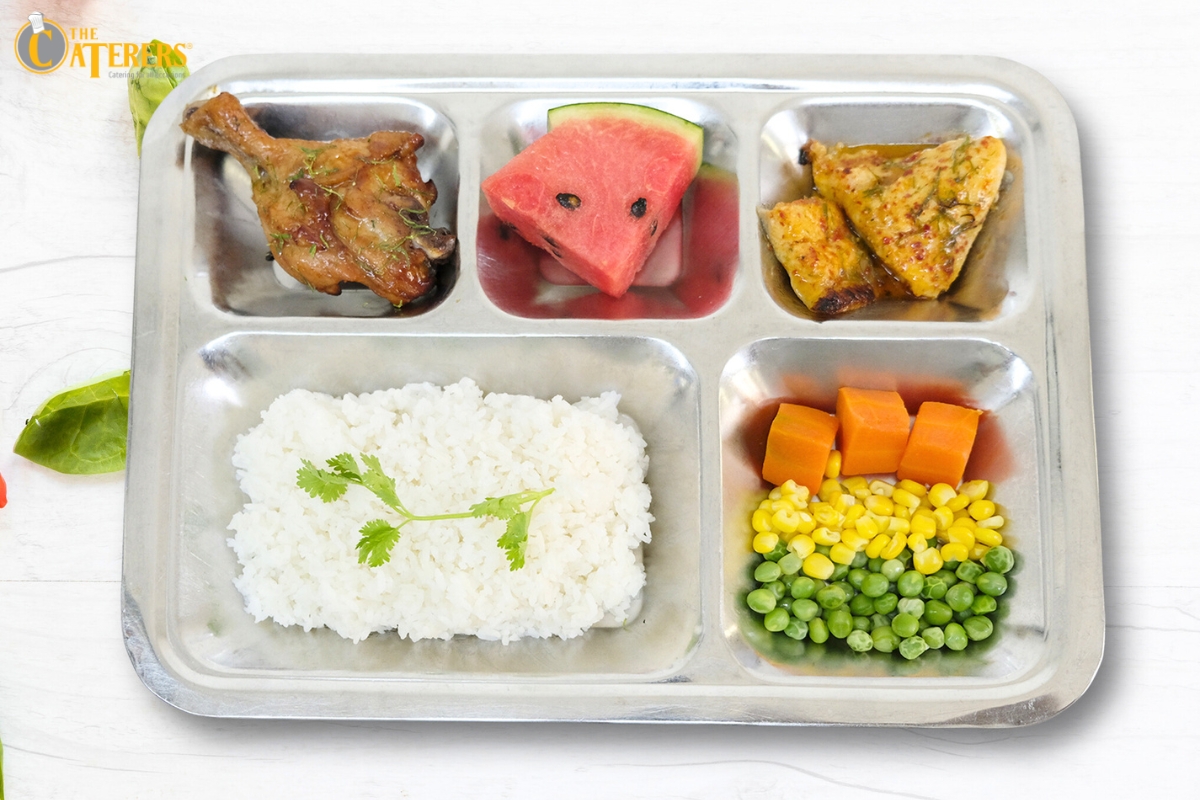
*The nutritional guidelines referenced in this article are compiled and adapted from official school meal nutrition recommendations issued by the Ministry of Health.
Preschool Students (3-5 Years Old)
At the preschool stage, children require moderate energy intake while their digestive systems are still sensitive. Meals should prioritize soft, easy-to-digest foods with mild seasoning and clearly separated dishes that are easy for young children to enjoy such as: soft rice or noodles, proteins (meat, fish, eggs, or beans), gently cooked vegetables, and naturally sweet fresh fruit. The key is maintaining harmony between components to feel light, comforting, and “easy to digest”.
Primary School Students (6-10 Years Old)
At the age of 6-10, children experience rapid physical development so their daily meals should provide sufficient energy and a well-balanced distribution of macronutrients with: protein about 13–20%, lipids about 20–30%, glucids 55-65% of total daily energy. For semi-boarding schools, allocating energy throughout the day helps students “stay energy”: lunch approximately 30-40% of the daily energy requirement and an afternoon snack provides an additional 5-10%, this reduces gradual fatigue and ensures concentration during classes.
| Age group | Energy (kcal) | Percentage of protein: lipid: glucids | |
|---|---|---|---|
| Lunch (30–40%) | Snack (5–10%) | ||
| Ages 6–7 | 454,2–605,6 | 75,7–151,3 | 13–20%; 20–30%; 55–65% Lunch: 535–713 kcal Snack: 89,2–178,3 kcal |
| Ages 8–9 | 532,5–710 | 88,8–177,5 | |
| Ages 10–11 | 618,6–824,8 | 103,1–206,2 | |
Source: School Meal Nutrition Guidelines issued by the Ministry of Health (Decision No. 3958/QĐ-BYT)
| Age group | Energy requirements of boy students (kcal/day) | Energy requirements of girl students (kcal/day) |
| Average physical activity * | Average physical activity * | |
| Ages 6-7 | 1570 | 1460 |
| Ages 8-9 | 1820 | 1730 |
| Ages 10-11 | 2150 | 1980 |
Source: School Meal Nutrition Guidelines issued by the Ministry of Health (Decision No. 3958/QĐ-BYT)
Secondary & High School Students (11-18 Years Old)
For students aged 11-18, nutritional demands increase significantly due to puberty, rapid physical growth, and higher academic intensity, so the meal should be carefully aligned with activity levels to prevent nutrient deficiencies or excessive calorie consumption that may lead to unhealthy weight gain. From a well-managed school catering environment, menus should prioritize quality protein (lean meat, fish, eggs, beans), moderate carbohydrates, plenty of vegetables and fruits, and limit fried and sugary foods to reduce “heavy tummy” and support focus during lessons.
| Age group | Energy requirements of boy students (kcal/day) | Energy requirements of girl students (kcal/day) |
| Average physical activity * | Average physical activity * | |
| Ages 12-14 | 2500 | 2310 |
| Ages 15-19 | 2820 | 2380 |
Source: School Meal Nutrition Guidelines issued by the Ministry of Health (Decision No. 3958/QĐ-BYT)
Key Principles for Building Effective School Meal Portions
Designing nutritious school meals should based on 8 Criteria for Choosing a School Meal Catering Provider and always be based on scientific guidelines, ensuring adequate energy aligning with the needs of each age group. According to the Ministry of Health’s school meal nutrition guidelines, several core principles should be followed:
1. Balanced Energy Distribution Throughout the Day
- Breakfast: 25–30%
- Lunch: 30–40%
- Afternoon snack: 5–10%
- Dinner: 25–30%
For schools operating semi-boarding programs, accurately calculating energy levels for lunch and afternoon snacks is particularly important to maintain students’ energy and concentration throughout the day.
2. Diverse Food Groups in Every Menu
- Carbohydrates (cereals, root vegetables)
- Protein (meat, fish, eggs, milk, beans)
- Lipid (oil, fats in moderate portions)
- Fresh vegetables and fruit
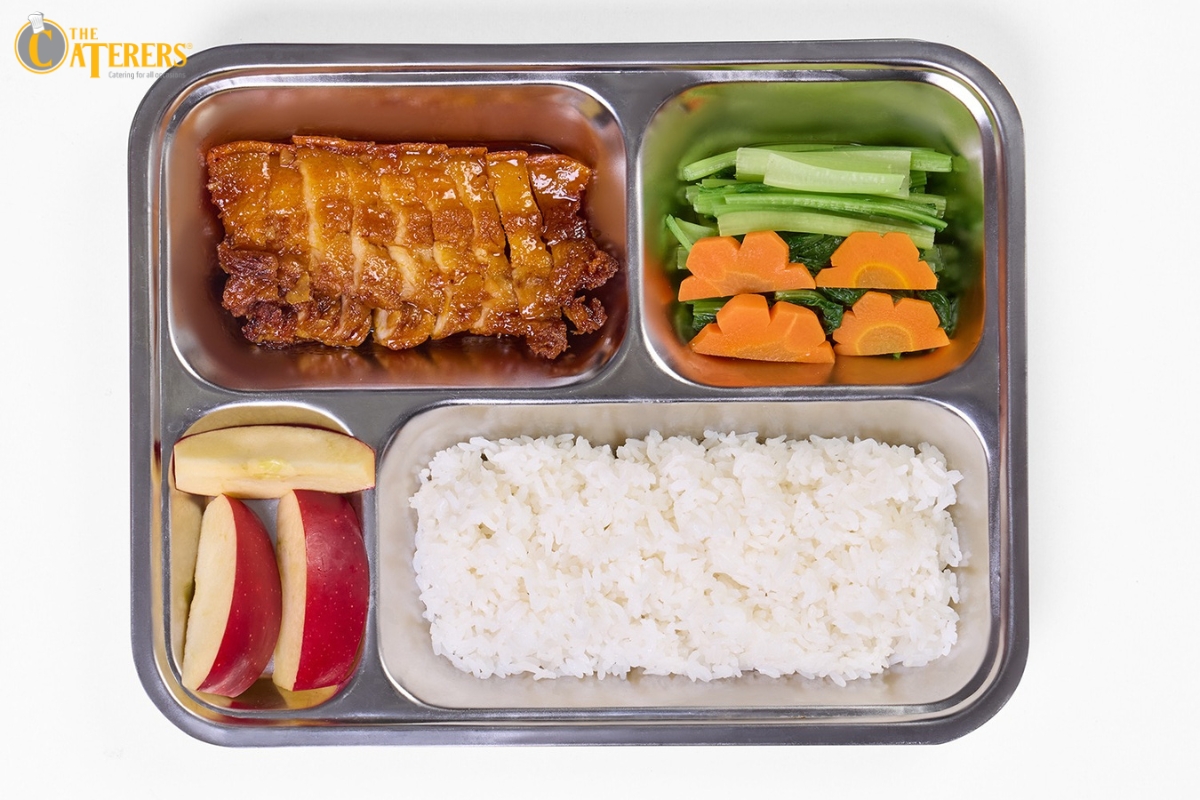
Combining both animal-based and plant-based ingredients enhances the value of meals and ensures adequate micronutrient intake.
3. Limit Unhealthy Ingredients Such As:
- Food high in saturated or trans fats
- Products containing excessive sugar or salt
- Deep-fried or heavily processed foods
4. Food Safety and Operational Feasibility
A key principle when developing school meal plans for students is that the menu must use clearly sourced ingredients, strict food safety standards and practical kitchen implementation. When safety and operational efficiency are well managed, schools can maintain consistent meal quality while ensuring long-term sustainability in catering services.
The Role of Professional School Catering Providers
A professional school meal provider plays a crucial role in both nutrition and operational management: advising school meal portions, designing science menus, quality control and food safety procedures. In particular, providers need to closely follow relevant national guidelines and regulations, including Decision No. 3958/QĐ-BYT issued on December 25, 2025, which provides official nutrition guidance for school meals from the Ministry of Health.
Beyond nutrition, the quality of water used for cooking and food service is another essential foundation of meal safety. Clean water standards applied in food preparation are commonly referenced under national technical regulations such as QCVN 01-1:2018/BYT, which outlines the requirements for clean water used in domestic purposes.
With extensive experience partnering with schools, and parents, The Caterers takes a comprehensive, end-to-end approach: every meal meets students with clear standards, daily stability and building long-term trust.
The Caterers – School Meal Portions Solutions
The Caterers designs school meal plans tailored to each age group, meeting nutritional standards and flexibly adapting to the semi-boarding school lunch model for easy organization by schools and monitoring by parents. With over 20 years of experience and a team of over 700 members, The Caterers maintain consistent quality: from taste and portion sizes to service procedures.
The core lines in a transparent supply chain and a Farm-to-School control process adhering to Global/GAP standards, ensuring “clean” ingredients right from the start. The Caterers also apply menu engineering techniques design menu (Menu Engineering) with an R&D team researching school nutrition and taste preferences, resulting in meals that are both nutritious and easy to eat: fragrant, fluffy rice, savory dishes, delighted soups, crisp vegetables, fresh fruit, making into the tray of food which looks so appetizing.
Regarding risk management, The Caterers follows internationally recognized systems such as HACCP and ISO 22000, helping to control food hazards, protect the school’s reputation, and experience of the students. In short, when meals are designed “appropriate for age and needs,” school meals become an integral part of quality education: children get healthier, learn better, and parents have assurance that their children are being taken care of, even in a simple lunch break.
In addition, The Caterers is developing calorie-calculated menu sets, allowing clearer portion control monitoring. The menu is also designed to be diverse to meet practical needs, ranging from international, Vietnamese menus to all-vegan menus.
If your school is optimizing School Canteen, The Caterers can assist in consulting and developing appropriate school meal plans tailored to different age groups and the school’s nutritional goals.
To quickly visualize a “real meal tray” for each age group, please refer to some sample school meal menus designed by The Caterers here: sample menu 1 and sample menu 2.


