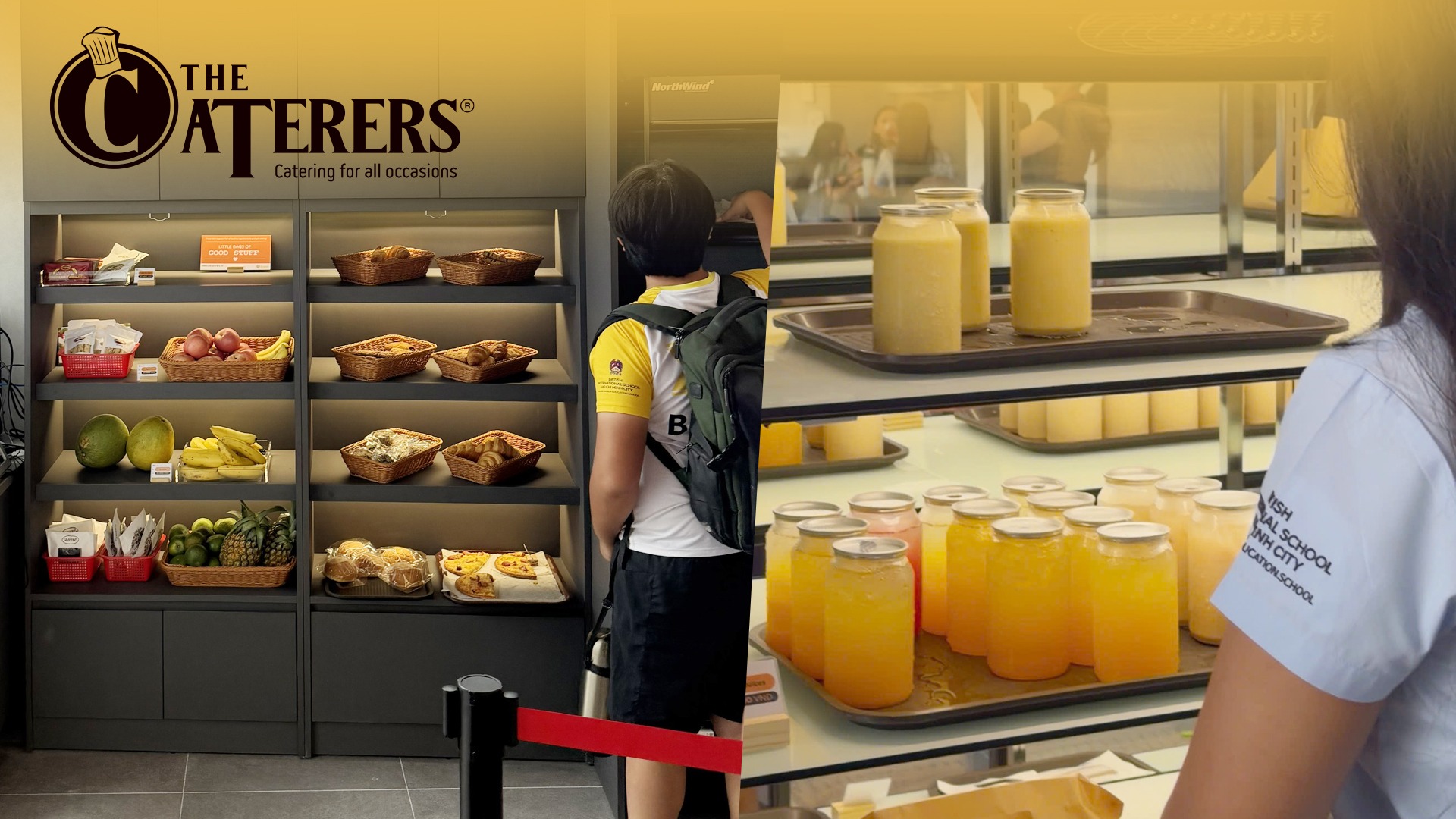
Choosing the right school meal provider affects food quality, food safety, student nutrition, daily canteen operations, and parent confidence. Rather than focusing only on sample menus or cost per meal, schools should evaluate each provider based on four key factors: service capacity, operating model, meal structure, and contractual responsibilities.
This guide explains what schools should define before contacting providers, the four stages of a structured selection process, the key criteria for comparing contractors, and the contract terms to confirm before signing.
What Schools Should Define Before Approaching a School Meal Provider
Without clearly defined internal requirements, providers may interpret the brief differently, making quotes difficult to compare. Schools should therefore confirm the following four areas before requesting proposals, ensuring every contractor responds to the same requirements.
| Information | What to Define | Impact on Pricing |
| Scale | The number of students, the year levels involved, how many meals are served each day, the meal times for each year group, and any expected fluctuation in enrollment. | This determines how many staff and how much equipment are required, and how the service shifts should be organised. |
| Service model | Whether the school will run an on-site kitchen, receive meals from a central kitchen, or appoint a provider to manage the canteen. | This changes the structure of the investment cost and defines the role each party plays. |
| Meals | The budget per meal, the menu cycle, portion sizes, allergies, and any special dietary requirements. | This sets the price range for ingredients and determines how complex the dishes will be to prepare. |
| Delivery model | Whether finished meals arrive from a central kitchen, or are cooked, portioned, and served on site. | This is the largest variable of all, because it changes transport, facility requirements, and how quality is controlled. |
The 4-Step Process for Selecting a School Meal Provider
Once the requirements are defined, schools should follow a structured, staged selection process. This supports consistent evaluation, keeps the timeline on track, and allows the contract to be finalised before the new school year.

Step 1 – Standardise Requirements and Pre-qualify
Send every provider the same bidding plan, including the requirements brief, a standard quotation template, and a document checklist. Providers should then be pre-qualified against five criteria:
- Legal compliance: A valid business licence and current certification confirming that the facility meets food safety requirements.
- Food safety systems: Current HACCP, ISO 22000, or equivalent certification covering the preparation and supply of school meals.
- School catering experience: A list of schools currently served, the year levels supported, and the average duration of each contract.
- Service capacity: Evidence that the provider can consistently deliver the required meal volume for the school.
- Client references: Relevant clients with named contacts who can verify the provider’s performance and service record.
Pre-qualification should reduce the shortlist to three to five providers for detailed assessment. At this stage, food safety should be the primary consideration when evaluating school meal service providers.
Step 2 – Verify Operating Capability
Submitted documents provide preliminary evidence that a provider’s systems meet required standards. Before making a final decision, schools should conduct an on-site inspection to confirm how those systems operate in practice.
Inspect the central kitchen or an active school meal project, following the full food flow:
- Ingredient sourcing: Supplier records and batch documentation for each delivery.
- Storage controls: Cold and dry storage temperatures, stock organisation, and expiry-date management.
- Food preparation: A one-way workflow that separates raw ingredients from cooked food.
- Operational procedures: Portioning, cleaning, and food sample retention in line with regulations.
Schools should also assess staffing and operational controls:
- Staffing structure and shift allocation.
- Food safety training and regular staff health checks.
- Batch-level traceability for incident management.
- Contingency plans for staff shortages, equipment failure, and supply disruptions.
Strong contingency planning helps distinguish providers that can maintain reliable service under changing conditions. A tasting session is also useful, but it assesses food quality only and does not confirm the provider’s ability to deliver consistently at scale.
Step 3 – Score the Proposals and the Total Cost
Each submission should be assessed using the same weighted criteria, including food safety, experience, menu quality, operational capability, cost, and collaboration with the school. Scores should be based on documented evidence and site inspections, giving the school administration team a clear and plausible basis for selecting a long-term school meal provider.
Schools should also compare the full service scope, not just the price per meal. Lower quotes may exclude staffing, transport, equipment, or cleaning, resulting in additional costs after operations begin. The following items should therefore be confirmed in writing:
| Item | Key Question | Potential Risks |
| Staffing | Who is responsible for recruiting, managing, and paying staff: the provider or the school? | The school may incur unplanned staffing costs. |
| Transport | Is transport included in the meal price? If not, how are delivery fees calculated? | Additional delivery charges may apply throughout the contract. |
| Equipment | Who is responsible for purchasing, repairing, and maintaining the equipment? | Unclear responsibilities may lead to disputes when equipment fails to perform. |
| Cleaning | Who is responsible for cleaning the kitchen and managing waste: the provider or the school? | Cleaning and waste management costs may fall to the school. |
| Additional Costs | What other costs may arise during the school year, and how will they be calculated? | The school may exceed its budget without clear grounds to dispute the charges. |
Step 4 – Trial, Negotiate, and Sign the Contract
Where possible, schools should trial the service with one year level or campus before rolling it out across the whole school. This helps assess service speed, student response to the meals, and how effectively the provider manages daily operations.
Find out more: Food Safety in School Catering Services: Key Insights for Schools
Quick Checklist for Evaluating a School Meal Provider
The checklist below helps the school confirm each provider’s claims against documented evidence, rather than relying on what the proposal states.
| Criteria | Key Question | Evidence to Review |
| Legal Compliance | Does the provider hold all valid licences, food safety certifications, and legal documents required to supply school meals? | Current business licences and valid food safety certifications. |
| Experience | Has the provider worked with schools of a similar size, year level, and operating model? | A relevant project list and client references with named contacts. |
| Ingredient Control | How does the provider manage suppliers, incoming goods, retained food samples, and ingredient traceability? | Supplier records, goods-receiving documents, and food sample retention records. |
| Operations | Can the provider’s staff, equipment, and procedures meet the school’s required meal volume and service schedule? | An operating plan and findings from the central kitchen inspection. |
| Menu | Does the menu meet students’ age-based nutritional needs, budget requirements, and specific dietary needs? | A complete menu cycle and portion-size specifications. |
| Cost | Does the quotation clearly define the service scope, included items, additional charges, and price adjustment terms? | An itemised quotation, proposed KPIs, and a draft contract. |
What Should a School Meal Contract Clarify?
A well-structured contract should clearly define each party’s rights and responsibilities, providing a clear basis for resolving future disputes. Schools should confirm the following four areas during contract negotiations:
Service Scope and Organisation
- Scope of work and responsibilities of each party.
- Process and cut-off time for confirming daily meal numbers.
- Service schedule by year level and meal preparation location.
- Responsibilities for using, maintaining, and returning school facilities.
Menu and Food Quality
- Menu cycle, approval process, and age-appropriate portion sizes.
- Rules for menu substitutions when ingredients are unavailable.
- Procedures for declaring and managing food allergies.
- Requirements for ingredient sourcing, food sample retention, and traceability.
Staffing, Operations, and Costs
- Staffing levels, qualification requirements, equipment provision, and maintenance responsibilities.
- Hygiene standards and waste management procedures.
- Unit prices, payment terms, and conditions for price adjustments.
Performance, Incidents, and Contract Termination
- Measurable KPIs, including on-time service, complaint rates, and testing results.
- Reporting requirements and procedures for handling feedback and incidents.
- Contract duration, early termination conditions, and handover arrangements.
Common Mistakes Schools Should Avoid When Choosing a Provider
- Choosing based on meal price or a single tasting session: A low unit price may exclude staffing, transport, equipment, or cleaning costs. A tasting also reflects food quality on one occasion, not the provider’s ability to deliver consistently at scale.
- Reviewing documents without an on-site inspection: Licences and certifications confirm compliance at the time of assessment, but they do not prove that current operations still meet the required standards. A site visit allows the school to verify actual practices and controls.
- Signing a contract without KPIs or incident procedures: Without measurable performance standards and clear response timelines, the school has limited grounds to require corrective action. This can delay issue resolution and affect the long-term partnership.
- Event catering and industrial food service operate differently from school meal programs. Providers should demonstrate relevant experience across different school sizes, year levels, and operating models.
- Selecting a general caterer without school-sector experience:: event catering and industrial kitchens operate very differently from a school kitchen model. When reviewing a provider’s track record, School Canteen services should demonstrate both experience and variety, proving the provider can adapt to different school models.

The Caterers – Trusted Partner for School Meal in Ho Chi Minh City and Hanoi
The Caterers has more than 20 years of experience in the catering industry, supplying over 20,000 meals a day to more than 50 international schools nationwide. Schools can have confidence in meals that are both nutritious and varied, and that are matched to the dietary needs of students at every level.
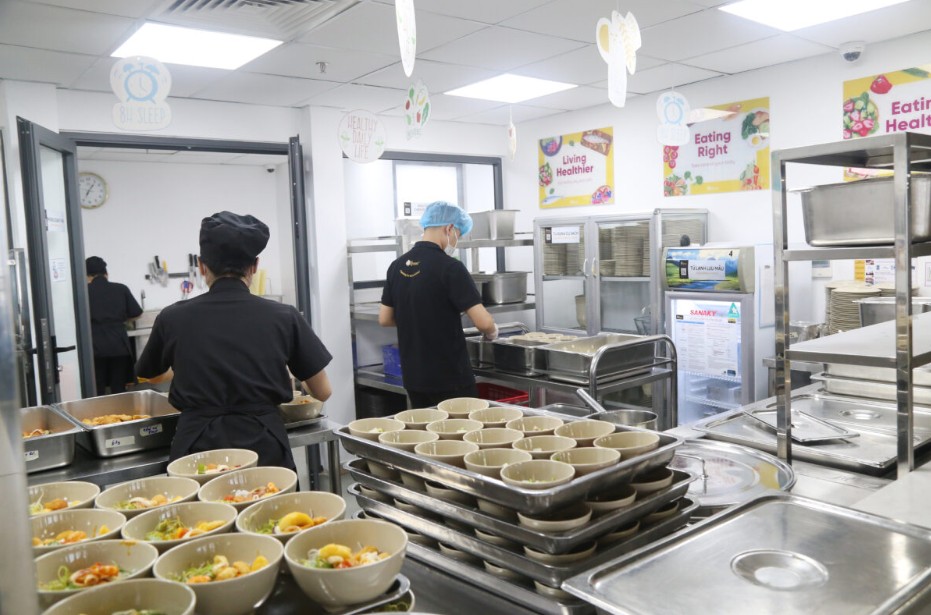
- Ingredients and quality control: ingredients are sourced from traceable suppliers, inspected on arrival, and stored according to established procedures. Food samples are retained as required, while the full process is monitored by a dedicated quality management team and covered by QBE product liability insurance.
- Kitchen operations: the central kitchen is certified to ISO 22000:2018 and HACCP standards and operates through a closed, one-way workflow. The Caterers also provides kitchen design consultancy for schools developing new facilities or upgrading existing canteens.
- Menu and nutrition: menus are developed for students from preschool to secondary school and updated on a regular cycle. Vietnamese and international dishes are combined to accommodate different cultural preferences and nutritional requirements.
- Flexible canteen models: services can be tailored to each school’s facilities and operating needs, including on-site kitchens, individually portioned meals delivered from the central kitchen, canteen counters, kiosks, and coffee counters
Contact The Caterers for advice on the school meal model that best suits your school’s size and operating conditions:
- Hotline: 028 3812 6901
- Email: sales@thecaterers.vn