Food safety in school meal services is a factor that cannot be taken lightly in the operation of school meals. Behind each meal is not only the matter of nutrition, but also students’ health, parents’ peace of mind, and the school’s reputation.
Therefore, when choosing a partner, schools need to properly understand what food safety in school meal services means, as well as learn the important criteria for evaluating whether a provider has sufficient capacity to accompany the school in the long term.
What Is Compliance with Food Safety Standards in School Meals
Food hygiene and safety is not only a requirement on paper, but also the way a meal system is controlled in practice when the school meal provider enters real operation. When these two factors are clearly understood, the process of selecting and evaluating a partner will have a more objective basis.
Food Safety
Food hygiene and safety in the school environment is a strict control process from the stage of receiving ingredients, processing, until the food is placed on the tray, ensuring that every student meal is always clean, wholesome, and absolutely safe. This is the “barrier” that protects students’ health and brings complete peace of mind to parents every day.
Every stage needs to be strictly controlled in order to diminish risks and ensure that meals are provided under safe and consistent operating conditions. In other words, food safety in school meal services is the result of a structured operating system throughout the entire process, not merely a separate inspection step of the final school meal delivered to students.

Compliance with Standards
Besides documents on food hygiene and safety, compliance with food safety standards in school meals also requires the ability to properly meet requirements on facilities, operating procedures, hygiene, personnel, and quality control throughout the meal provision process. To ensure compliance in overall operation, choosing services that also come with additional insurance could be beneficial for schools before considering long-term partnership with any provided services.
For schools, the matter to consider is not only whether the provider has valid documentation, but whether they truly maintain compliance in daily operations. This is the factor that determines the long-term stability and safety of the school meal service.
Legal Basis And Food Safety Documentation In Schools
Legal documents and materials related to food safety are always the first layer of inspection when schools evaluate a school meal provider.
During the review process, schools should pay attention to the enterprise’s legal documents, certificates related to food safety, personnel training records, health examination records, internal control procedures, food sample retention, and monitoring forms, if available. In addition, supplementary certifications on quality management or food safety standards may also show the provider’s serious level of investment in school meal services.
A suitable provider not only needs clear documents but must also demonstrate the ability to maintain compliance throughout daily operations.
What Schools Should Consider When Choosing A School Meal Provider
When choosing a school meal provider, schools should not stop only at sample meal plans or procedural documents but rather evaluating the level of suitability, operating capacity, and level of safety that the provider can maintain in practice.
Basic Requirements
When choosing a school meal provider, pricing needs to go hand in hand with many other important criteria, such as ingredient sources, facilities, kitchen procedures, and the food safety control system. These are the factors that truly determine the real value of the service provided by that provider.
In addition, schools should conduct a comprehensive evaluation of the operating process, the ability to trace ingredient origins, the method of quality control, and the provider’s actual adaptability before making a decision. The service provider also needs to meet foundational requirements such as organizing the kitchen properly, clearly controlling inputs, and having a professionally trained personnel team.
In other words, evaluating food safety in school meal services is the overall evaluation of actual operating capacity at each stage, from receiving ingredients to delivering meals to students.

Other Advanced Requirements
After the basic criteria have been met, schools may continue to consider more advanced factors, depending on their own model and needs. These may include the ability to balance cost and nutrition, flexibility in developing meal plans for each school level, the ability to change monthly meal plans, or diversity in preparation methods to suit a school environment with students from many different cultural backgrounds.
These are not mandatory criteria for every school, but they are signs showing suitability in the process of long-term cooperation. A good provider not only meets current needs correctly, but also has the ability to adapt when the school proposes changes in the model or expectations for meal quality.
What Schools Should Avoid When Evaluating A School Meal Provider
One of the most common mistakes is looking only at the quotation or sample meal plan. These two factors may create a positive first impression, but they do not fully reflect the provider’s operating capacity or ability to control food safety.
Another mistake is only checking documents without observing actual practice. If the school does not review how the provider organizes the kitchen, controls ingredients, handles hygiene, or responds when problems arise, then the evaluation will be difficult to make objectively.
In addition, schools also need to avoid choosing a provider that lacks operating experience in the school environment. School meals have very specific requirements regarding age group, daily routines, nutrition, and coordination with the school. A suitable partner does not only need to cook well, but must also clearly understand the characteristics of the educational environment. That is why schools need to pay attention to the criteria when choosing a school catering service provider in order to find a long-term and sustainable partner.
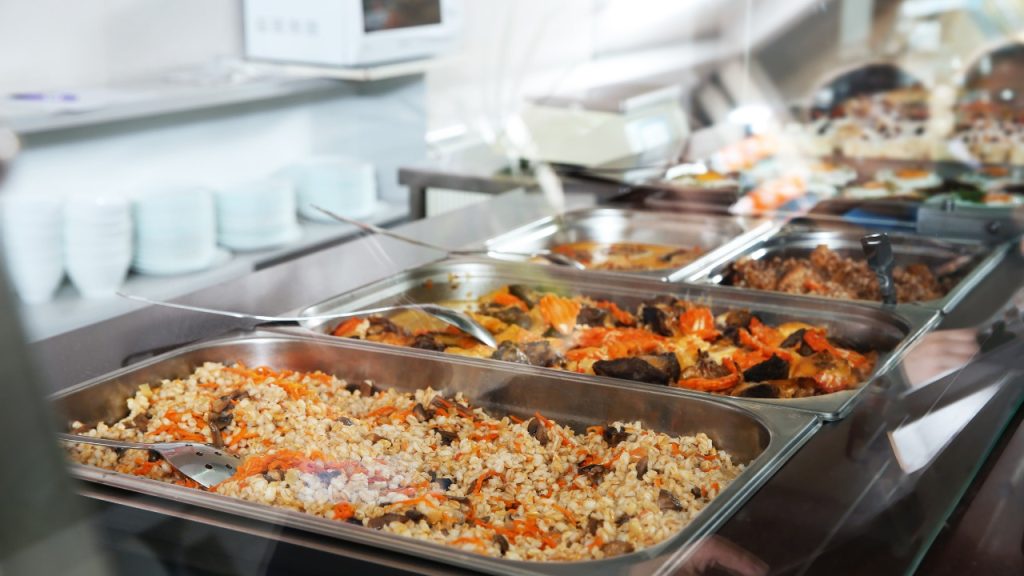
The Caterers - A School Meal Partner Focused On Food Safety And Compliance
Understanding the needs of schools and parents, The Caterers orients its school meal services based on the core elements of a high-quality school meal: food safety, professional operating procedures, quality control, and the ability to provide a long-term strategic partnership. To ensure comprehensive operation, The Caterers also equip additional insurance from the QBE Insurance, ensuring transparency and directly protecting the provision of quality school meals.
Established in 2003, The Caterers has more than 20 years of experience in the catering service field, with the ability to meet diverse needs for school meals in many school environments. With a transparent supply chain, a control process from input to service, a professionally trained operations team, and a stable quality management orientation, The Caterers focus on the ability to develop meal plans suitable for each school model and each student group with specific operating requirements. This is an important foundation for The Caterers to become a strategic partner, accompanying schools in the long term to ensure meal quality and build trust with parents.
Contact The Caterers to develop a vegetarian menu suitable for your school’s programme.
- Hotline: 028 3812 6901
- Email: sales@thecaterers.vn
- Website: www.thecaterers.vn
- Address: 15-15A Do Cong Tuong, Tan Son Nhi, Ho Chi Minh City 70000, Vietnam