Portions for primary school students are always a major concern for parents and schools, as this is a stage when children undergo rapid physical and cognitive development. A well-designed portion helps children develop healthy eating habits while enabling families and schools to monitor meal quality more clearly.
In this article, The Caterers will suggest 10 scientific, practical menus, covering breakfast, lunch, and supper suggestions, suitable for school nutrition needs that have been implemented in The Caterers’ lunch catering services.
Nutritional Requirements Of Primary School Students
Children’s nutritional needs are not fixed but change across developmental stages. During preschool years, meal portions mainly aim to support foundational physical development and the formation of eating habits. By secondary school, especially during puberty, the body grows rapidly in height and physical capacity, requiring meal plans to be adjusted appropriately in both quantity and quality.
At primary school age, children need sufficient daily energy to support learning, play, and physical development. A prolonged energy deficit or excess can affect physical growth, immune system, and the ability to concentrate at school.
Therefore, when developing portions for primary school students, parents and schools should focus on balancing food groups to support optimal development during this critical stage. A suitable meal should include adequate carbohydrates, protein, fats, vitamins, and minerals to support comprehensive development according to the recommended balanced P:L:G ratio issued by the Ministry of Health.
In addition to macronutrients, vitamins and minerals play a crucial role in children’s development. These micronutrients should be consistently provided through vegetables, fruits, milk, and a diverse range of foods in daily meals. Therefore, many schools choose a professional school canteen service to help provide balanced meals with essential vitamins and minerals for students every day.
In summary, a nutrition plan is not about feeding children excessively, but about distributing food appropriately according to age-specific needs. When meals are balanced and suitable, children will have a stronger foundation for physical development, sustained concentration, and the formation of healthy eating habits.

Expert Recommendations for Primary School Student Portions
To effectively build meal portions for primary school students, food should be appropriately distributed across meals throughout the day. Each meal plays a distinct role, from initiating morning energy to supplying nutrients and maintaining alertness during school hours.
Breakfast Portion
As the first meal of the day, the breakfast portion should be carefully prepared to ensure balanced nutrition while remaining easy to digest. A suitable breakfast may include broth-based dishes, with carbohydrates from rice vermicelli, pho, or fresh noodles; protein from eggs, meat, fish, or milk, and combined with vegetables or fruits to increase vitamins and fiber.
Warm dishes in the morning often create a more appetizing experience, support digestion, and help the body start the day gently. For primary school students, this is an essential foundation for maintaining alertness and concentration during early classes.
Lunch Portion
Lunch is the main meal of the school day and should include 2 to 3 protein-rich food sources, with at least one fish option to enhance nutrient diversity. The recommended energy intake for lunch should also be appropriate for the child’s age.
A lunch portion for primary school students typically includes carbohydrates from rice, vermicelli, pasta, or noodles, accompanied by a savory dish – stir-fried dish, soup, and ripe fruit for dessert. This arrangement ensures children receive sufficient energy, protein, vitamins, and minerals in a complete meal.
Snack Portion
The snack portion plays the role of replenishing energy after school and before children engage in physical or end-of-day activities. Snacks should include milk and dairy products, preferably unsweetened or low-sugar milk, to control sugar intake.
Although it is a smaller meal, the snack remains an essential component in building daily portions, helping children maintain a stable physical condition and reduce fatigue toward the end of the day.
>>> Discover how to build a standard portion for primary school students
10 Standard Portions For Primary School Students
To make portion planning easier to apply, below are 10 suggestions arranged by meals throughout the day. These portions emphasize balance among protein, carbohydrates, vegetables, and side dishes, while prioritizing light broth-based dishes in the morning so children can eat and digest easily and start the school day in a comfortable state.
Portion 1
- Morning: Rice vermicelli soup with chicken, bamboo shoot
- Lunch:
- Main dish: Pan-seared mackerel with lemon butter sauce & mashed potatoes
- Side dish: Boiled winter melon and carrots with mashed potatoes
- Soup: Pumpkin soup
- Dessert: Two types of fruit
- Afternoon snack: Rice balls and herbal drink
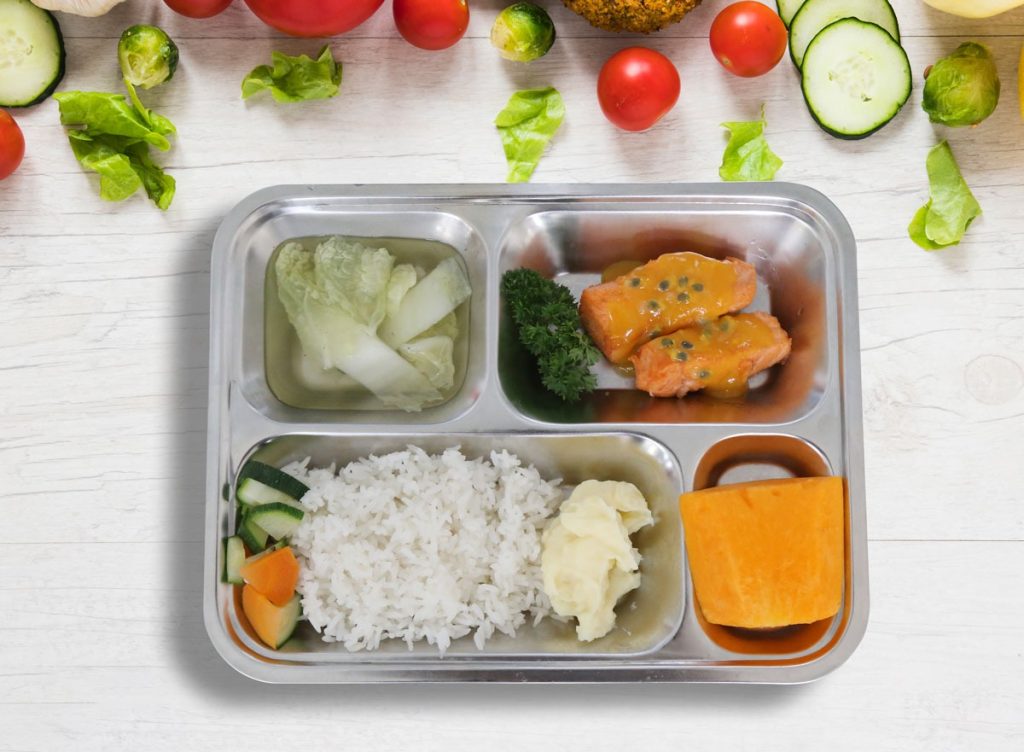
Rice vermicelli soup with chicken and bamboo shoot is a distinctive breakfast dish that feels light and is suitable for young students. Lunch with mackerel, mashed potatoes, and pumpkin soup provides abundant protein, carbohydrates, and beta-carotene to support physical development and vision.
Portion 2
- Morning: Beef pho (brisket)
- Lunch:
- Main dish: Breaded fried shrimp & cocktail sauce
- Stir-fried dish: Stir-fried zucchini
- Soup: Choy sum soup
- Dessert: Two types of fruit
- Afternoon snack: Butter bread and fruit juice
Beef pho is a familiar, light broth dish that is warm and suitable for the morning because it is easy to digest and provides quick energy. Lunch combines shrimp, vegetables, and green soup to create a more balanced portion, while the afternoon snack adds carbohydrates and vitamins from fruit juice.
Portion 3
- Morning: Rice noodle soup with shrimp and pork
- Lunch:
- Main dish: French-style braised chicken & bread
- Stir-fried dish: Boiled broccoli and carrots
- Soup: Amaranth and Malabar spinach soup
- Dessert: Two types of fruit
- Afternoon snack: Milo cocoa drink
Shrimp and pork thick rice noodle soup provides a balanced source of protein and carbohydrates, suitable for children needing a warm breakfast. Lunch with braised chicken, boiled vegetables, and leafy soup increases variety and supports fiber and micronutrient intake.
Portion 4
- Morning: Nha Trang tuna vermicelli soup
- Lunch:
- Main dish: Thai-style tamarind fish fillet
- Side dish: Boiled vegetables with pumpkin soup
- Dessert: Fruit
- Afternoon snack: Cereal & banana or crab soup
Nha Trang tuna vermicelli soup has a mild flavor, light broth, and provides high-quality protein from fish. Lunch with fish fillet, mushrooms, broccoli, and fruit ensures balanced food groups, while the afternoon snack offers flexibility between cereal or crab soup to supply energy for the end of the day.

Portion 5
- Morning: Pasta with shrimp and pork or shredded pork bread
- Lunch:
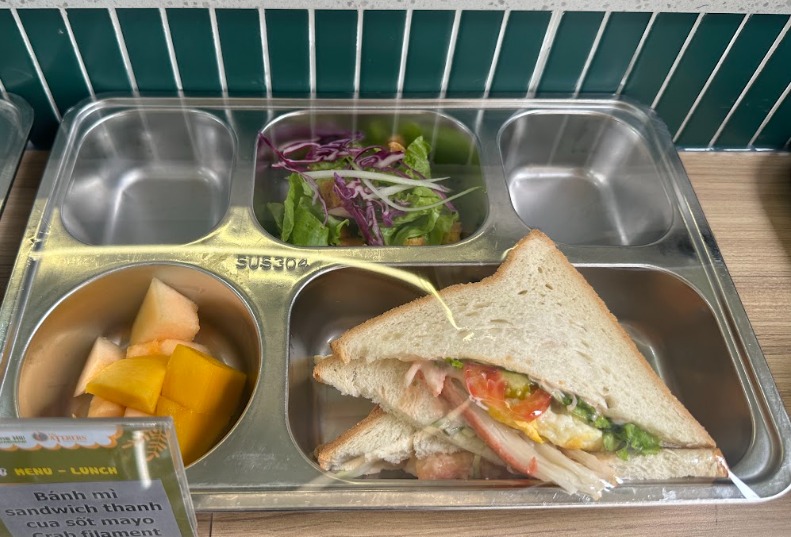
- Main dish: Crab stick sandwich with mayo sauce
- Side dish: Salad
- Dessert: Cantaloupe and mango
- Afternoon snack: Hawaiian pizza or bread & butter
This portion creates a fresh and modern appeal, suitable for children who enjoy modern dishes. If pasta with shrimp and pork is chosen for breakfast, children receive a warm and light meal. Meanwhile, lunch with sandwiches, salad, and fruit makes the portion more vibrant and appealing.
Portion 6
- Morning: Beef stew noodle soup
- Lunch:
- Main dish: Rosemary roasted chicken drumstick
- Side dish: Stir-fried napa cabbage with mushrooms
- Soup: Pumpkin soup with shrimp
- Dessert: Fruit
- Afternoon snack: Raisin swirl pastry or bread & butter, milk tea
Beef stew noodle soup provides a rich flavor and essential morning energy with tender braised beef. Lunch with roasted chicken drumsticks, stir-fried napa cabbage with mushrooms, and pumpkin shrimp soup creates a harmonious combination of animal protein, vegetables, and nutrient-rich soup, enhancing appetite and stimulating children’s taste.
Portion 7
- Morning: Quang noodles
- Lunch:
- Main dish: Beef pho
- Side dish: Stir-fried bean sprouts
- Dessert: Cantaloupe
- Afternoon snack: Steamed dumplings
Quang noodles offer a balanced breakfast with carbohydrates, protein, and accompanying vegetables, providing stable energy at the start of the day. A highlight of this portion is serving beef pho for lunch, a light broth dish suitable for hot weather or when encouraging children’s appetite.

Portion 8
- Morning: Quang noodles
- Lunch:
- Main dish: Fish cake thick noodle soup
- Side dish: Stir-fried vegetables
- Dessert: Cantaloupe
- Afternoon snack: Cheese tteokbokki or fish fillet rice cracker
Portion 8 balances familiar dishes with highlights from different cuisines, helping school meals feel less monotonous. Fish cake thick noodle soup at lunch is a suitable choice due to its soft texture and appealing flavor, combined with stir-fried vegetables and fruit to increase fiber and vitamin intake.
Portion 9
- Morning: Broken rice with pan-seared pork
- Lunch:
- Main dish: Steamed rice with stir-fried beef in soy sauce
- Side dish: Stir-fried chayote
- Soup: Seaweed soup
- Dessert: Mango and cantaloupe
- Afternoon snack: Shredded chicken penne
This portion provides relatively high energy, with protein from multiple meats suitable for more physically active days. Stir-fried beef in soy sauce supplies protein and iron, while stir-fried chayote and seaweed soup contribute fiber and minerals, creating a balanced portion for primary school students.

Portion 10
- Morning: Seafood thick noodle soup
- Lunch:
- Main dish: Pasta with Napolitana sauce
- Side dish: Self-mixture lettuce salad
- Soup: Spinach soup
- Dessert: Liquid yogurt
- Afternoon snack: Chocolate cereal or chicken and bamboo shoot glass noodle soup
Seafood thick noodle soup is a warm, light, and protein-rich breakfast suitable for starting the day. Pasta with Napolitana sauce at lunch provides novelty, with a mildly sweet and tangy sauce paired with lettuce salad, spinach soup, and yogurt to create a more nutritionally balanced and palatable portion.
FAQs When Building Portions For Children
When building portions for primary school students, many parents and schools often wonder about the frequency of portion rotation, which food groups should be limited, and the feasibility of vegetarian portions. The questions below will help make the portion-building process clearer and more scientific.
How Often Should Portions For Primary School Students Be Changed?
To avoid monotony and ensure nutritional diversity, parents and schools should rotate portions daily or weekly. Reasonable variation also helps children become familiar with different food groups and maintain interest in meals.
Which Foods Should Be Limited In Portions For Primary School Students?
Parents and schools should limit foods high in sugar, salt, or saturated fat, such as fried foods, soft drinks, sweets, and fast food. These foods can negatively affect weight, natural taste preferences, and children’s long-term health.
Should Vegetarian Portions Be Developed For Primary School Students?
Primary school students can follow vegetarian portions if meals are scientifically planned and nutritionally adequate. However, vegetarian portions should only appear occasionally for variety and should not replace regular meals. Frequent vegetarian eating may lead to deficiencies in important micronutrients such as iron, zinc, vitamin B12, and omega-3, affecting brain and physical development.
To ensure vegetarian meals provide sufficient nutrition, the menu must follow a balance across the four main nutrient groups, with replacing animal protein as a top priority. Plant-based protein sources may include:
- Plant protein sources from soybeans and soy products (tofu), lentils, legumes, mushrooms, and nuts.
- Sources of iron & zinc: Nuts and certain vegetables such as bell peppers and whole grains.
- Sources of calcium: Legumes such as soybeans, mung beans, almonds, and broccoli.
Standard Portions For Primary School Students From The Caterers
With more than 20 years of experience in meal services and a team of over 700 staff, The Caterers is a trusted choice for schools seeking efficient and secure dining solutions suitable for students’ development. With a transparent supply chain and strict control processes from farm to school, The Caterers provides peace of mind in every operational stage, delivering balanced and nutritious lunches with appealing flavors.
In addition, The Caterers has strong portion design capabilities with an R&D team that continuously trains and conducts in-depth research on school taste preferences and nutrition. Compliance with international standards such as HACCP and ISO 22000 gives schools greater confidence, meeting the requirements of various education models from public and private to international institutions.
Contact The Caterers today for expert consultation on school meal solutions aligned with your school’s operational direction and quality standards.
Contact The Caterers to develop a vegetarian menu suitable for your school’s programme.
- Hotline: 028 3812 6901
- Email: sales@thecaterers.vn
- Website: www.thecaterers.vn
- Address: 15-15A Do Cong Tuong, Tan Son Nhi, Ho Chi Minh City 70000, Vietnam